The mood at the Royal Society meeting was anxious, to say the least. The gathering, a full house of more than 300 in-person and 700 online, was hastily convened to discuss the whirlwind impact of artificial intelligence on mathematics. It came after a flurry of announcements of AI-assisted solutions to problems that had stood for decades or more.
It didn’t help people’s nerves that in the run-up to the meeting, having already stunned mathematicians by solving the Navier-Stokes problem, a description of fluid flow, the US tech firm OpenAI dumped more than 700 papers on the internet that claimed solutions to a further 300 open problems in mathematics.
“It felt like we were in a cataclysmic situation,” says Prof Jon Keating, an Oxford mathematician who co-organised the meeting at the end of October. “It was so many papers across so many areas of mathematics. It felt like we were almost surrounded.”
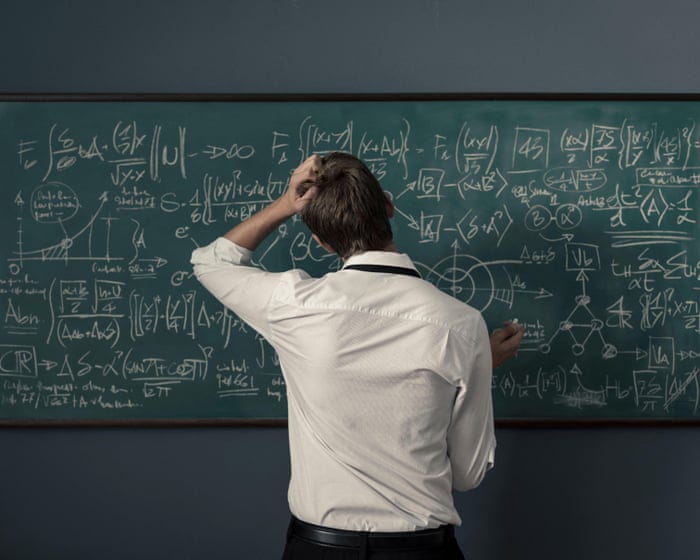
Among the most concerned were early career researchers who saw the foundations of mathematics crumbling beneath their feet. Mathematicians are rewarded for their ability to solve problems, but with gut-wrenching speed, AI has surpassed the best practitioners on the planet. What now remains for them?
The pressure has not let up. Last week, another US tech firm, Anthropic, claimed an AI-assisted solution to the Riemann hypothesis, a problem that has stood for more than 160 years. The solution, released in a programming language called Lean, designed to verify mathematical proofs, runs to 17m lines of code, or 250,000 pages. Hundreds, if not thousands, of experts are now trying to make sense of it.
“It’s overwhelming, there’s no other way to describe it,” says Prof Bryna Kra, a mathematician at Northwestern University in Evanston, Illinois, and the former president of the American Mathematical Society. “Each day you wake up and say, OK, what’s solved today?”
From the outside, the upheaval in mathematics has the air of a distant crisis, one that affects others we barely consider. But this wave of chaos does not stop at the blackboard. Its arrival poses broader, more profound questions: how much human thinking should we cede to AI? What will humans be good for?
“There is going to be a societal choice, which is how much do we value the human identity,” says Prof Hugo Duminil-Copin, a Fields medallist at the University of Geneva and the Institute of Advanced Scientific Studies near Paris. “There is a danger of losing our identity as human thinkers.”
Mathematics is different in the hands of AI, or at least AI companies. Mathematicians can spend months or more polishing and perfecting proofs so that they are understandable and elegant. Often that elegance distils an idea to its most meaningful essence. This is rarely the case with AI proofs. “The ones I have looked at, they are not elegant, they are not beautiful, they bury the ideas,” says Kra. We should expect as much: AI models are trained to find answers, not to help humans understand them.
“There is now a necessity and value in taking these proofs and turning them into something where the understanding is more apparent,” says Kra. “It’s not just the proof that matters. We want to understand the mechanism behind it that makes things true.”
Prof Geordie Williamson, a mathematician at the University of Sydney, recalls two recent examples of how AI solutions can play out. In July, Levent Alpöge, the mathematician at Anthropic who claims to have solved the Riemann hypothesis, tweeted a counter-example to a problem called the Jacobian conjecture after working on it with AI assistance over a weekend. It showed mathematicians had been thinking about the problem the wrong way, and pointed to rich connections to other questions. “It was really cool because people came to grips with it really quickly,” Williamson says. But a month later, Alpöge released discoveries on another area called Hadamard matrices. This time there was no such insight. “They made so much progress but gave us no indication of how,” Williamson says.
In the past, mathematicians proved themselves by proving theorems. It was a proxy for mathematical prowess and shaped who got hired and where. But now theorems can be proved by people with no idea how they were produced or what they mean. How mathematicians are evaluated needs a radical rethink.
Has AI destroyed the joy of maths? Something, certainly, has been lost, but plenty of intellectual endeavour remains. “Problem solving is not going to go away, it’s part of human nature,” says Prof Nestor Guillen at New York University. “It’s like saying people are going to stop dancing or creating music or writing poetry.”
The threat, Guillen says, is not AI but AI companies. He believes OpenAI and Anthropic are causing “enormous harm” to professions by “extracting value from the talent, labour and love” people put into their crafts. He suspects they want to push a narrative of replacing labour to prop up their evaluations. One fear, he says, is that mathematicians leave the field at a time when their skills are more important than ever to ensure that AI is understood and controlled.
Guillen likens AI proofs to new substances that scientists rush to understand. Without expertise, it cannot be understood, but mathematicians can extract the value, like carefully removing rock from around a gem stone. There is still a thrill from learning maths from AI models, adds Keating, who wonders if the field will become more like particle physics, where hundreds of researchers collaborate to understand the proofs before them.
Duminil-Copin cried when OpenAI released its mass of papers in October. Many of the problems he was working on had been solved at a stroke. But he swiftly recovered. “I don’t feel downgraded. There is still so much to do as humans in mathematics,” he says. “When your house gets totally broken, of course you’re going to cry, but that doesn’t mean you’re not going to build another one which is just as beautiful.”
He sees an opportunity for mathematicians to return to their roots and focus on disseminating mathematical knowledge, ensuring that it reaches all the sciences, teachers and the public. “I think we forgot that beyond proving new results, what is fundamental is to transmit some understanding of mathematics to other mathematicians and to a larger audience,” he says.
Far more than mathematics is at stake here. “The agenda of these big corporations is not the same as our collective agenda. They want to prove that they can replace us because they want to sell a product,” Duminil-Copin says. “We should think about, do we want to delegate exactly the activities that make us learn, that make us grow, and it’s mathematics as much as writing, as much as critical thinking, as much as all the activities that make us smarter collectively and individually. It’s a question society has to ask itself globally. It’s not just for mathematicians, it’s for everybody.”