In September 2022, humanity's first-ever asteroid deflection test ended with a bang as a NASA spacecraft slammed into a rock the size of a skyscraper.
The doomed spacecraft's final view showed the pebbled surface of asteroid Dimorphos rushing forward at roughly 14,000 mph (22,500 km/h). Millions of miles away, the Hubble and James Webb space telescopes saw a tremendous impact flash, then a freshly hewn swarm of boulders spewing into space around the embattled asteroid.
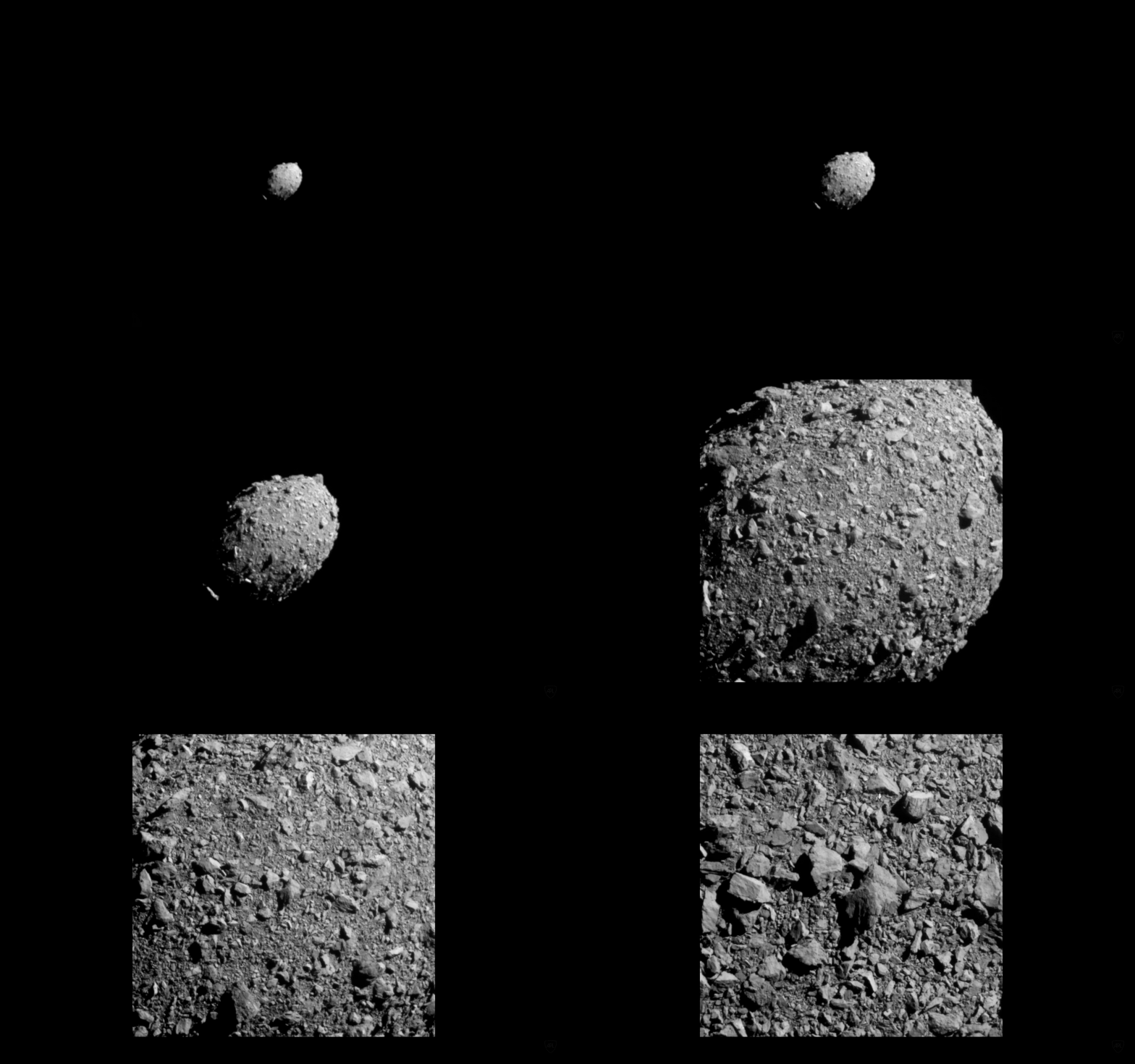
Further observations eventually revealed that the mission — called the Double Asteroid Redirection Test (DART) — had been a smashing success, shaving a remarkable 33 minutes off of Dimorphos' orbit around its larger companion asteroid, Didymos. But with no other spacecraft in the vicinity, little else was known about what the impact actually did to Dimorphos — until now.
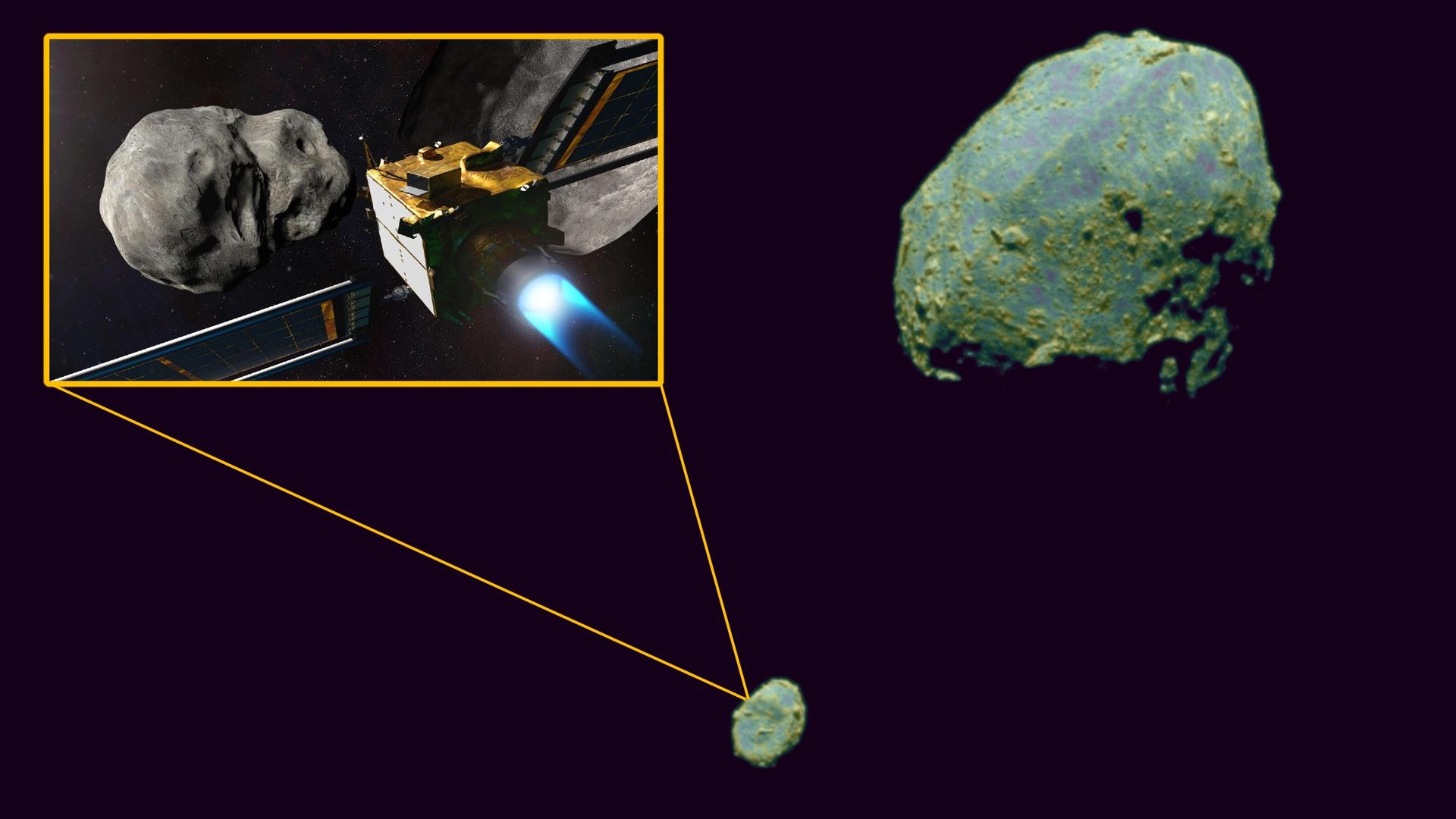
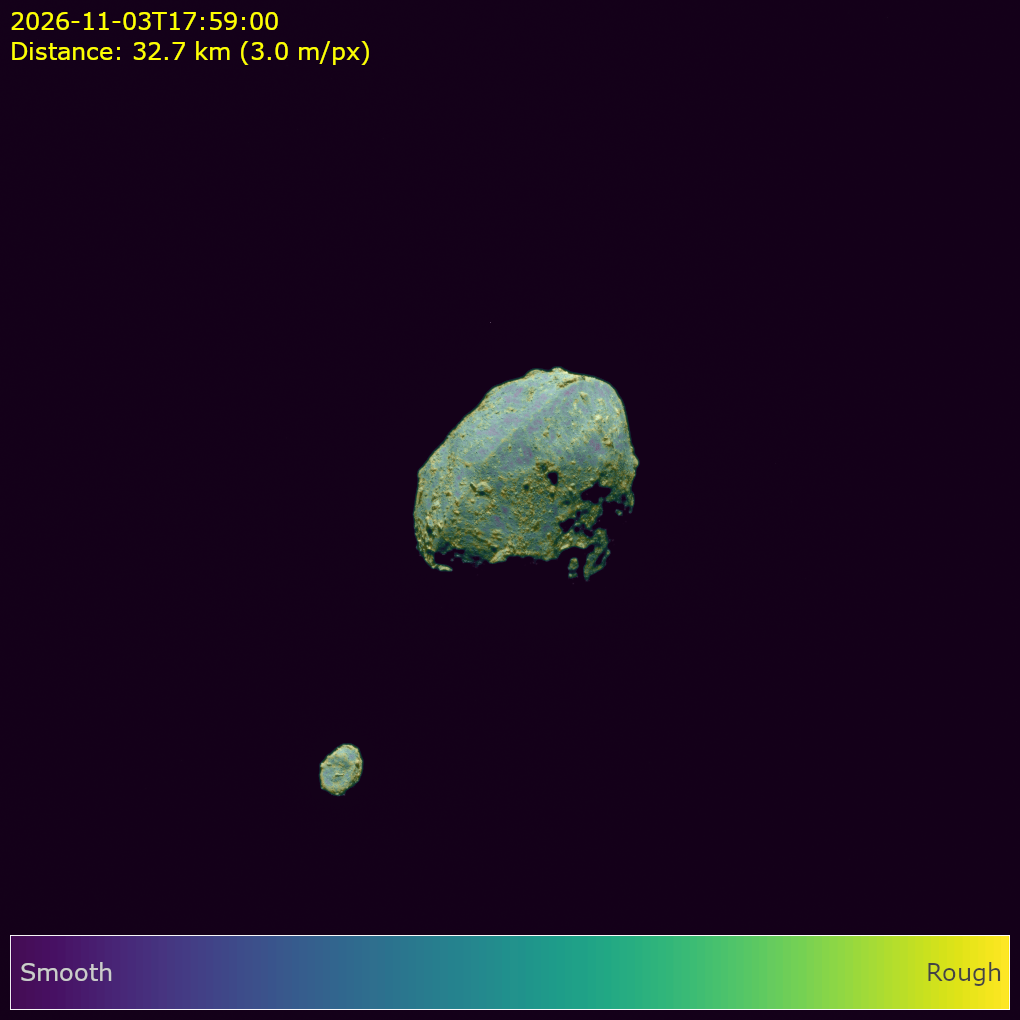
On Wednesday (Nov. 25) the European Space Agency (ESA) released the first close-up images of Dimorphos and Didymos since NASA threw its historic space punch four years ago. The new images, taken by ESA's Hera spacecraft — currently cruising in a rectangular orbit around the asteroids — reveal the sibling space rocks in astounding detail, from as close as 15 miles (24 kilometers) away.
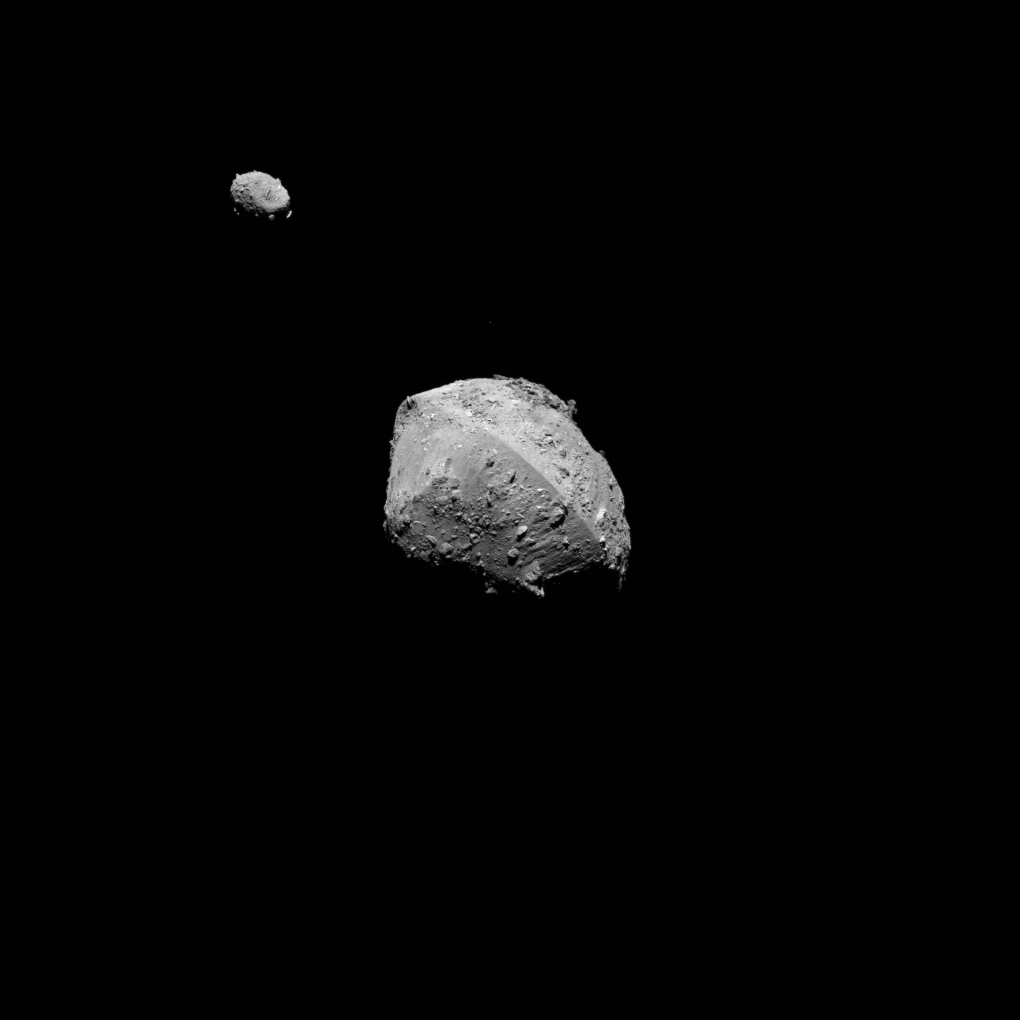
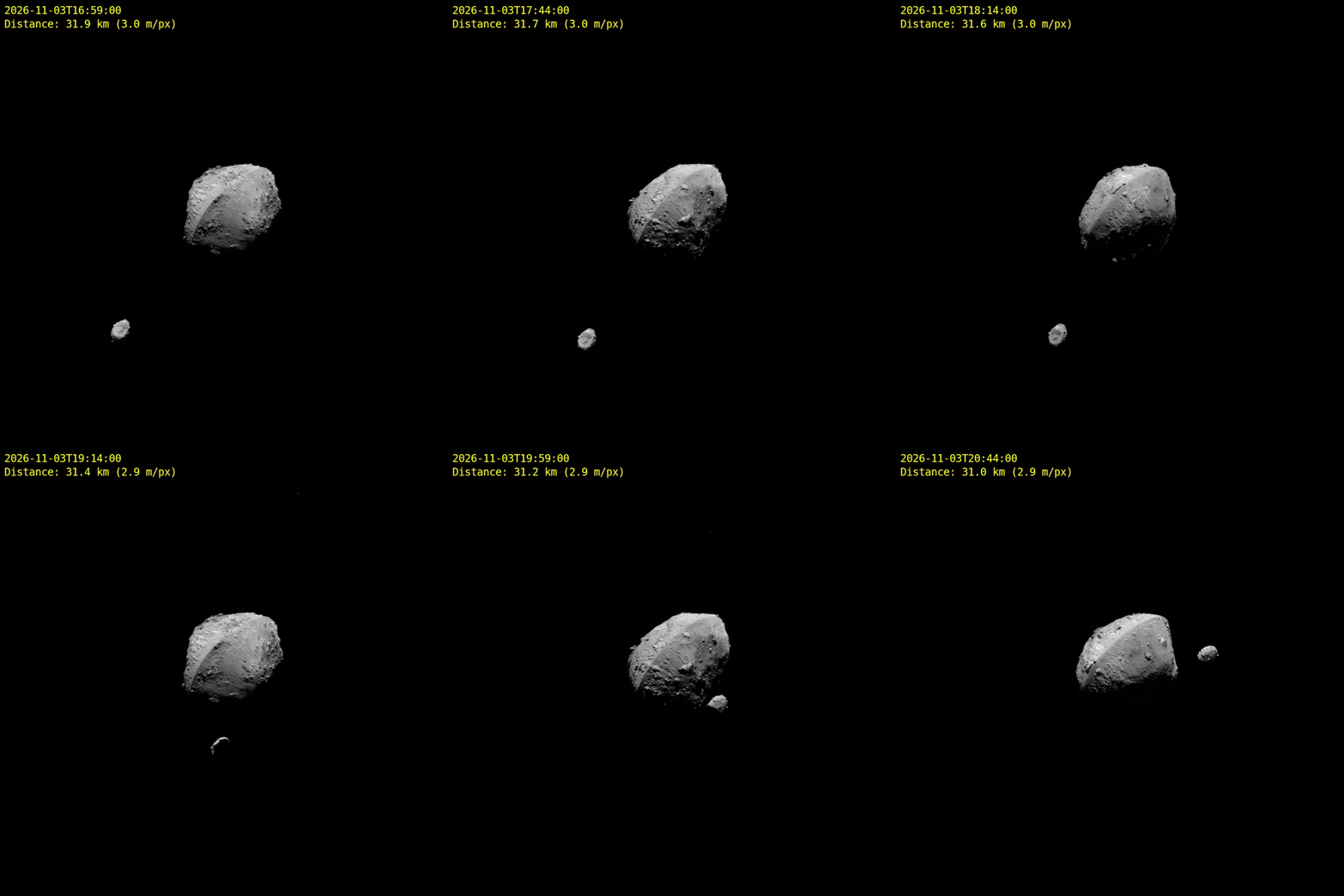
Thanks to Hera's images, we now know that DART totally reshaped the face of Dimorphos. One half of the roughly 500-foot-wide (150 meters) asteroid has been flattened with an enormous impact crater, which ESA compared to the size of a sports stadium. Time-lapse images of Dimorphos in orbit show that the asteroid is tumbling chaotically around its companion — a result of its new uneven shape and the force of the DART impact.
Zooming in, Hera spotted a strange cigar-shaped structure at the center of the impact crater. Mission scientists don't yet know what the tubular object is but hope to get a better view when Hera moves about 1.2 miles (2 km) closer to the asteroid pair in December.
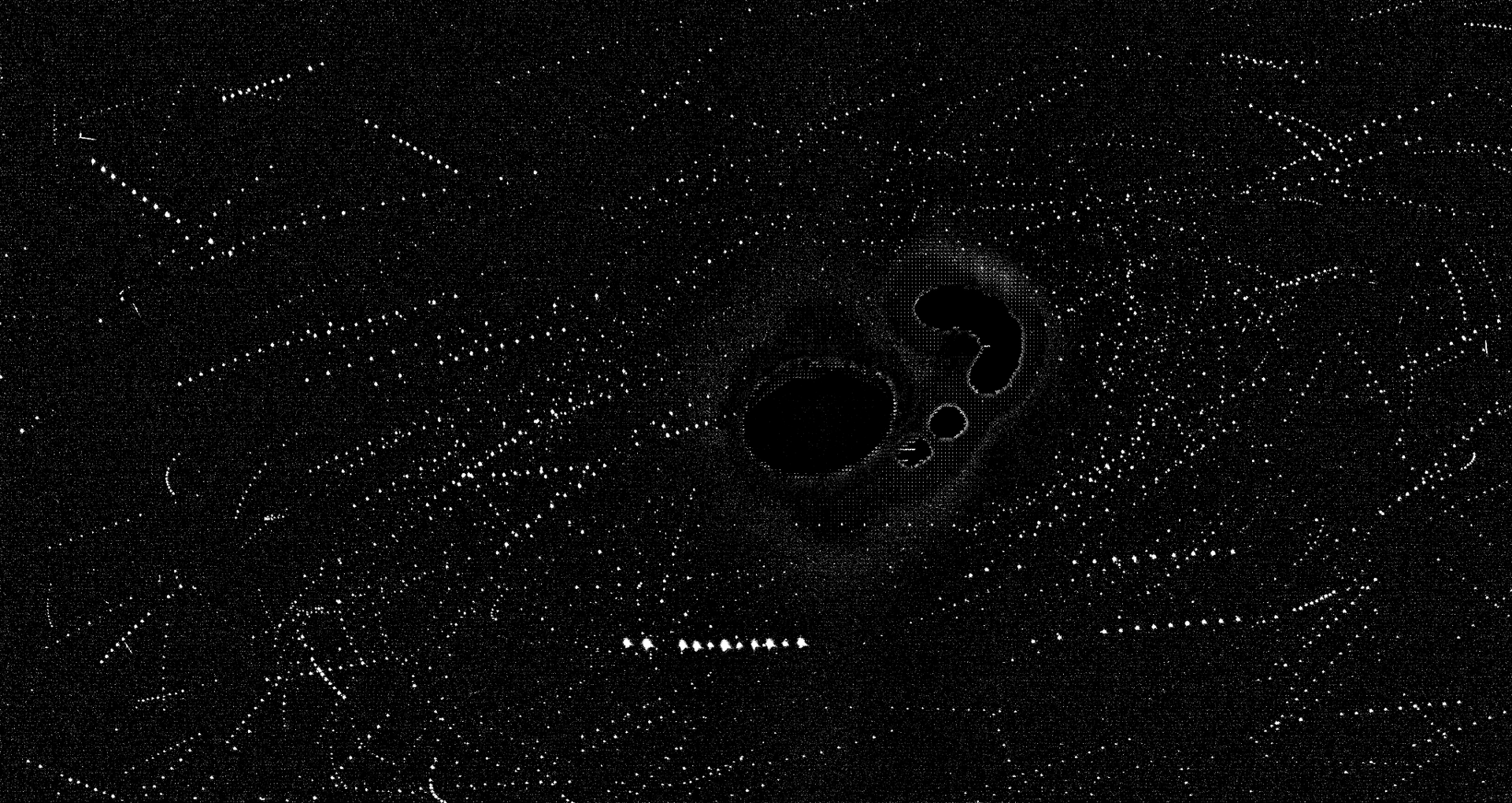
Looking at the region around the asteroids, Hera also spotted hundreds of previously unknown boulders circling the system, most of which are just a few feet in diameter. Ejected rocks like these are likely responsible for many of the newfound craters that have appeared on Dimorphos and Didymos since the DART impact.
Michael Küppers, ESA's Hera mission scientist, called these boulders a "big surprise," and noted that mission controllers will need to take the rocky swarm into account as Hera moves closer for the next phase of its mission.
After Hera closes the gap with the asteroids in December, it will deploy two new probes — tiny CubeSats called Juventas and Milani — that will turn the mission into a triple-pronged investigation. According to ESA, Juventas will use low-frequency radar to study Dimorphis' interior while Milani analyzes the composition of the dust and surface material in the vicinity.
With Juventas and Milani both expected to get even closer to Dimorphos and Didymos than Hera has, the best images of the historic asteroid system are yet to come.
These insights will help scientists determine precisely how effective the DART impact was, and under what conditions similar methods could be used to protect Earth from potentially hazardous asteroids in the future.
More space photos: Voyager 1's light-day milestone: 50 years of amazing solar system discoveries in photos